top of page


Architecture, Territory, and Networks of Illegality
Architecture and urban planning can address territorial violence through care, land regulation and community life. Feminist urbanism proposes safer, more equitable and livable cities built around everyday life and collective needs.
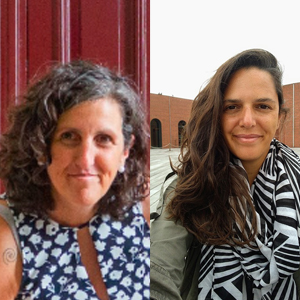
Gabriela M Gonzalez & Anabela Roitman


The Value of What Is Not Sold
Selling a confiscated asset can recover money. Returning it to society can mean much more: reclaiming territory, rebuilding communities, and transforming what was once a source of criminal power into public value.
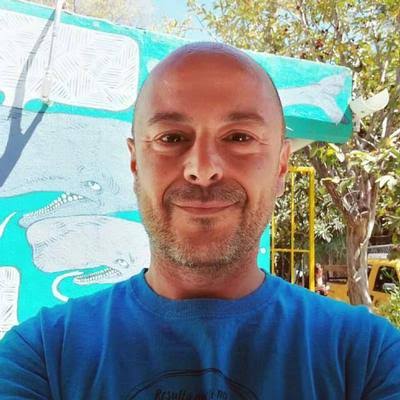
Emiliano Cottini


Criminal Governance and Deregulatory Neoliberalism
In the greater Buenos Aires area, territorial disputes between gangs are adding homemade machine guns and a new dimension of violence in San Martín.
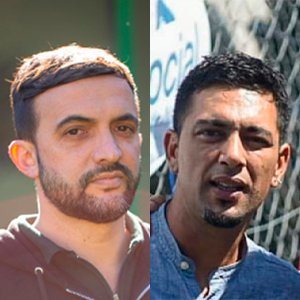
Leonardo Grosso & Pablo Amarante


Sovereignty and Organized Crime
Military occupation is no longer the only way to erode sovereignty. In the 21st century, criminal organizations contest authority over territories and force us to think about restoring state authority beyond security and social assistance.

Lucas Manjon


"Free to Choose": When the Mafia No Longer Decides the Future
Italy has just enacted into law an initiative born more than a decade ago that seeks to protect children, adolescents, young people, and women who choose to break away from family environments linked to organized crime.
Emiliano Cottini


Prop Guns
The danger of laughing at men who need to be feared: the story of a rebellion built on ridicule.
Lucas Manjon


Pio La Torre: The Law and the Mafia
In Palermo, a law changed the relationship between the state and the mafia. Pio La Torre was one of its driving forces.
Lucas Manjon


When society took the land away from the mafia
From the fields of Sicily, the social reuse of confiscated goods became one of the most innovative policies. Today it celebrates its 30th anniversary.
Lucas Manjon


The Uberization of Drug Trafficking
Drug trafficking no longer depends on large cartels: technology and the circulation of know-how enable a decentralized model in which small actors produce and sell drugs.
Lucas Manjon


When the Narco Became Flexible
The decentralized production of synthetic drugs transformed the logic of the drug war.
Lucas Manjon


Pablo Escobar and the State’s Luddite Reflex
How the State’s fragmented and uncoordinated response to drug trafficking resembles the Luddite logic: destroying instruments without transforming structures.
Lucas Manjon


The Morgue as a Political Laboratory
The debate on the age of criminal responsibility requires evidence, institutional capacity, and victim support — not urgent responses without real ability to implement them.
Lucas Manjon


The crime is being a democracy
Organized crime, exception, and power: an analysis of how security becomes a political argument in contemporary democracies.
Lucas Manjon


A new Odebrecht — powdered and white
Since the 21st century, global crises have entrenched a politics of fear that cut rights and weakened democracy; in Latin America, drug trafficking revives old forms of interference.
Lucas Manjon


Cesare Terranova: the judge who saw the mafia as power
In the 1960s, Cesare Terranova was the first judge to state that the Mafia was not a series of isolated crimes but a system of power infiltrating politics and the economy.
Lucas Manjon


The Market of the Brain and the Culture of Illegality
Data, attention and desire: Big Tech turns private life into a commodity and shapes consumption, politics, culture and organized crime.
Lucas Manjon


Emanuela Loi: the antimafia bodyguard
Emanuela Loi was the first female bodyguard killed by the mafia. She was 24 years old when she died alongside Borsellino in the Via D’Amelio massacre.

Lucas Manjon & Giulia Baruzzo


For the Love of His People
Don Giuseppe "Peppe" Diana was an Italian priest who dedicated his life to the fight against the Camorra, the Neapolitan mafia.
Lucas Manjon


Giovanni Falcone: the anti-mafia scientist
Pioneer in complex investigations such as drug trafficking, arms trafficking, and corruption through the pursuit of money.
Lucas Manjon


Francesca Morvillo: an antimafia judge
There are women who have not only been victims of the mafias but have also carried out their work against organized crime, fully aware that continuing to confront mafia power would put them in danger — even at risk of death. One of these women — whose name is often known, but whose story rarely is — is Francesca Morvillo. Here is part of her story.
Lucas Manjon & Giulia Baruzzo
bottom of page